~ Fae Folklore ~
Be sure to visit our new Facebook page, if you haven't already.
To become a member of ALFF simply click on the "Like" button when you arrive at the page.
Be sure to invite all your Fairyland friends, too!
We look forward to seeing you there!
http://tinyurl.com/NEW-ALFF-FANPAGE
To become a member of ALFF simply click on the "Like" button when you arrive at the page.
Be sure to invite all your Fairyland friends, too!
We look forward to seeing you there!
http://tinyurl.com/NEW-ALFF-FANPAGE
Please Note: ALFF is ONLY a Fan Club hosted by volunteers who have researched the Fairyland game to help YOU play
smarter, and not harder. We are not affiliated with the game or its developer.

Ever thought about what wildlife is attracted by a certain garden set-up?
You can check it on the wildlife calculator http://myarduinoprojects.com/wildlifecalculator/index.html |
If any text is ever too small to read comfortably, press the CTRL and the + key at the same time to increase the size.
Pressing CTRL and the - key at the same time will make it smaller.
Origins
The word fairy is a derivative of the Middle English word faierie (also known as fayerye, feirie, fairie), and it is a direct borrowing from Old French faerie (Modern French féerie) meaning the land, realm, or characteristic activity (i.e. enchantment) of the legendary people of folklore and romance called (in Old French) faie or fee (Modern French fée).
This derived ultimately from Late Latin fata (one of the personified Fates, hence a guardian or tutelary spirit, hence a spirit in general); cf. Italian fata, Spanish hada of the same origin. Fata, although it became a feminine noun in the Romance languages, was originally the neuter plural ("the Fates") of fatum, past participle of the verb fari to speak, hence "thing spoken, decision, decree" or "prophetic declaration, prediction", hence "destiny, fate".
It was used as the equivalent of the Greek Μοῖραι Moirai, the personified Fates who determined the course and ending of human life. To the word faie was added the suffix -erie (Modern English -(e)ry), used to express either a place where something is found (fishery, heronry, nunnery) or a trade or typical activity engaged in by a person (cookery, midwifery, thievery). In later usage it generally applied to any kind of quality or activity associated with a particular sort of person, as in English knavery, roguery, witchery, wizardry. Faie became Modern English fay "a fairy"; the word is, however, rarely used, although it is well known as part of the name of the legendary sorceress Morgan le Fay of Arthurian legend. Faierie became fairy, but with that spelling now almost exclusively referring to one of the legendary people, with the same meaning as fay. In the sense "land where fairies dwell", the distinctive and archaic spellings Faery and Faerie are often used. Faery is also used in the sense of "a fairy", and the back-formation fae, as an equivalent or substitute for fay is now sometimes seen.
The word fey, originally meaning "fated to die" or "having forebodings of death" (hence "visionary", "mad", and various other derived meanings) is completely unrelated, being from Old English fæge, Proto-Germanic *faigja- and Proto-Indo-European *poikyo-, whereas Latin fata comes from the Indo-European root *bhã- "speak". Due to the identical pronunciation of the two words, "fay" is sometimes misspelled "fey". A fairy in modern times (also known as faery, faerie, fay, fae, wee folk, good folk, people of peace, fair folk,) are known as a type of mythical being or legendary creature, a form of spirit, often described as metaphysical, supernatural or preternatural. Fairies resemble various beings of other mythologies, though even folklore that uses the term fairy offers many definitions. Sometimes the term describes any magical creature, including goblins or gnomes: at other times, the term only describes a specific type of more ethereal creature.
The word fairy is a derivative of the Middle English word faierie (also known as fayerye, feirie, fairie), and it is a direct borrowing from Old French faerie (Modern French féerie) meaning the land, realm, or characteristic activity (i.e. enchantment) of the legendary people of folklore and romance called (in Old French) faie or fee (Modern French fée).
This derived ultimately from Late Latin fata (one of the personified Fates, hence a guardian or tutelary spirit, hence a spirit in general); cf. Italian fata, Spanish hada of the same origin. Fata, although it became a feminine noun in the Romance languages, was originally the neuter plural ("the Fates") of fatum, past participle of the verb fari to speak, hence "thing spoken, decision, decree" or "prophetic declaration, prediction", hence "destiny, fate".
It was used as the equivalent of the Greek Μοῖραι Moirai, the personified Fates who determined the course and ending of human life. To the word faie was added the suffix -erie (Modern English -(e)ry), used to express either a place where something is found (fishery, heronry, nunnery) or a trade or typical activity engaged in by a person (cookery, midwifery, thievery). In later usage it generally applied to any kind of quality or activity associated with a particular sort of person, as in English knavery, roguery, witchery, wizardry. Faie became Modern English fay "a fairy"; the word is, however, rarely used, although it is well known as part of the name of the legendary sorceress Morgan le Fay of Arthurian legend. Faierie became fairy, but with that spelling now almost exclusively referring to one of the legendary people, with the same meaning as fay. In the sense "land where fairies dwell", the distinctive and archaic spellings Faery and Faerie are often used. Faery is also used in the sense of "a fairy", and the back-formation fae, as an equivalent or substitute for fay is now sometimes seen.
The word fey, originally meaning "fated to die" or "having forebodings of death" (hence "visionary", "mad", and various other derived meanings) is completely unrelated, being from Old English fæge, Proto-Germanic *faigja- and Proto-Indo-European *poikyo-, whereas Latin fata comes from the Indo-European root *bhã- "speak". Due to the identical pronunciation of the two words, "fay" is sometimes misspelled "fey". A fairy in modern times (also known as faery, faerie, fay, fae, wee folk, good folk, people of peace, fair folk,) are known as a type of mythical being or legendary creature, a form of spirit, often described as metaphysical, supernatural or preternatural. Fairies resemble various beings of other mythologies, though even folklore that uses the term fairy offers many definitions. Sometimes the term describes any magical creature, including goblins or gnomes: at other times, the term only describes a specific type of more ethereal creature.
Characteristics
Fairies are generally described as human in appearance, extremly long lived, and having magical powers such as the ability to fly, cast spells and control the weather/ seasons.
They are also cited for their mischievous nature. Their origins are less clear in the folklore, being variously dead, or some form of demon, or a species completely independent of humans or angels. Folklorists have suggested that their actual origin lies in a conquered race living in hiding, or in religious beliefs that lost currency with the advent of Christianity. These explanations are not necessarily incompatible, and they may be traceable to multiple sources. Fairies are found to be pagan in origin and are found amoung all branches of the Celtic families. Once known as pagan gods and goddesses, the tradition to worship these little beings spread to France, Germany, and the British Isles.
The Welsh peoples originally worked within a matriarchal society. They worshipped The Mother Goddess, and they called fairies The Mothers. Hence,
Fairyland was always the Land of Women and fairies are often depicted as such.
How to See Fairies
Fairies are rarely seen by humans. There are a few tricks one can use in order to see them:
* Legend says that if you pick a four leaf clover and lie quietly in a field, you will soon be surrounded with dancing fairies.
* You can also look for a stone that has a hole naturally bored into it by running water. Just look through the hole and you will see fairies.
Fairies are said to appear most frequently on the high days of the Celtic calendar. Beltane (May Eve), when they fight; Midsummer Eve, when they celebrate; and Samhain (November Eve) when they dance with ghosts and lament the coming of winter. The Irish still say fairies live in the pagan sidh (burial mounds and barrow graves), several hundred of which still stand in the Irish countryside today. Fairies are thought to have a connection to the deadlands as well as to heaven. They have the ability to freely weave in and out of the heavens, the earth, and the underworld. Fairies are still thought to come out of their hills (fairy hills) at Samhain or Halloween.
Fairies are also often found in wooded groves. Whether in hills or woods, they all reside in the land of Tir na nog which is the Land of Eternal Youth. Mortals cannot often see fairies because of the division of the worlds, but every now and again they get a precious glimpse of them. This often will happen at twilight when the veil of the worlds is briefly parted. Travelers must be wary, however. Entering Tir na nog can be very dangerous as few mortals have been known to escape alive. Mischievous fairies have been known to lure travelers into Tir na nog, and few of these travelers have returned. Travelers that did return often described a dreamlike state in which they spent most of their time in a curious fog. Sometimes a traveler would come back decades later only to find his loved ones had passed away, while the traveler himself was still as young as the day he entered
the grove. Will o' Wisps are illuminated fairies, pretty lights, which lead unwary travelers into this strange land, and can be avoided by refusing to follow them.
Fairy peoples are thought to have descended from the race of Elves. Elves are an ancient race of magical, slender creatures with pointed ears thought to be extinct. Unlike fairies, they lack the ability to fly, which may have made the fairies a more adaptable race. Elves were once very closely associated with the land and with nature and fairies took over many of their roles in this tradition. Fairies are now air, water, fire and tree spirits. These are also the four points that make up a pagan pentagram (air, water, fire and earth) and the fifth point is spirit, which the fairies incarnate represent.
Throughout most of the former celtic nations : Ireland, Scotland, Wales, Brittany and Germany, the fairies are becoming things of the past. Even though fairies are commonly believed to exist today, from the eighteenth century and on they have been seen less and less. Once firmly ensconced in the minds of men, the fairies may now be in decline. That people do not often see them any more makes some argue that the fairies will eventually disappear as men stop believing in them. Fairies have a reputation for stealing infant babies and replacing them with changelings. Parents can protect against kidnapping by lying the father's trousers over the cradle or by hanging an open pair of scissors above it.
Much of the folklore about fairies revolves around protection from their malice, by such means as cold iron (iron is like poison to fairies, and they will not go near it) or charms of rowan and herbs, or avoiding offense by shunning locations known to be theirs. In particular, folklore describes how to prevent the fairies from stealing babies and substituting changelings, and abducting older people as well. Many folktales are told of fairies, and they appear as characters in stories from medieval tales of chivalry, to Victorian fairy tales, and up to the present day in modern literature.
The Reverend Robert Kirk, Minister of the Parish of Aberfoyle, Stirling, Scotland, wrote in 1691:
"These Siths or Fairies they call Sleagh Maith or the Good People...are said to be of middle nature between Man and Angel, as were Daemons thought to be of old; of intelligent fluidous Spirits, and light changeable bodies (lyke those called Astral) somewhat of the nature of a condensed cloud, and best seen in twilight. These bodies be so pliable through the sublety of Spirits that agitate them, that they can make them appear or disappear at pleasure" - from The Secret Commonwealth of Elves, Fauns and Fairies.
Although in modern culture they are often depicted as young, sometimes winged, humanoids of small stature, they originally were depicted much differently: tall, radiant, angelic beings or short, wizened trolls being some of the commonly mentioned. Diminutive fairies of one kind or another have been recorded for centuries, but occur alongside the human-sized beings; these have been depicted as ranging in size from very tiny up to the size of a human child. Even with these small fairies, however, their small size may be magically assumed rather than constant.
Wings, while common in Victorian and later artwork of fairies, are very rare in the folklore; even very small fairies flew with magic, sometimes flying on ragwort stems or the backs of birds. Nowadays, fairies are often depicted with ordinary insect wings or butterfly wings. Various animals have also been described as fairies. Sometimes this is the result of shape shifting on part of the fairy, as in the case of the selkie (seal people); others, like the kelpie and various black dogs, appear to stay more constant in form.
Origin of fairies
Folk beliefs (Dead)
One popular belief was that they were the dead, or some subclass of the dead. The Irish banshee (Irish Gaelic bean sí or Scottish Gaelic bean shìth, which both mean "fairy woman") is sometimes described as a ghost. The northern English Cauld Lad of Hylton, though described as a murdered boy, is also described as a household sprite like a brownie, much of the time a Barghest or Elf. One tale recounted a man caught by the fairies, who found that whenever he looked steadily at one, the fairy was a dead neighbor of his. This was among the most common views expressed by those who believed in fairies, although many of the informants would express the view with some doubts.
Elementals
Another view held that the fairies were an intelligent species, distinct from humans and angels. In alchemy in particular they were regarded as elementals, such as gnomes and sylphs, as described by Paracelsus. This is uncommon in folklore, but accounts describing the fairies as "spirits of the air" have been found popularly.
Demoted angels
A third belief held that they were a class of "demoted" angels. One popular story held that when the angels revolted, God ordered the gates shut; those still in heaven remained angels, those in hell became devils, and those caught in between became fairies. Others held that they had been thrown out of heaven, not being good enough, but they were not evil enough for hell. This may explain the tradition that they had to pay a "teind" or tithe to Hell. As fallen angels, though not quite devils, they could be seen as subject of the Devil.
Demons
A fourth belief was the fairies were demons entirely. This belief became much more popular with the growth of Puritanism. The hobgoblin, once a friendly household spirit, became a wicked goblin. Dealing with fairies was in some cases considered a form of witchcraft and punished as such in this era. Disassociating himself from such evils may be why Oberon, in A Midsummer Night's Dream, carefully observed that neither he nor his court feared the church bells. The belief in their angelic nature was less common than that they were the dead, but still found popularity, especially in Theosophist circles. Informants who described their nature sometimes held aspects of both the third and the fourth view, or observed that the matter was disputed.
Humans
A less-common belief was that the fairies were actually humans; one folktale recounts how a woman had hidden some of her children from God, and then looked for them in vain, because they had become the hidden people, the fairies. This is parallel to a more developed tale, of the origin of the Scandinavian huldra.
Babies' laughs
A story of the origin of fairies appears in a chapter about Peter Pan in J. M. Barrie's 1902 novel The Little White Bird, and was incorporated into his later works about the character. Barrie wrote, "When the first baby laughed for the first time, his laugh broke into a million pieces, and they all went skipping about. That was the beginning of fairies."
Pagan deities
Many of the Irish tales of the Tuatha Dé Danann refer to these beings as fairies, though in more ancient times they were regarded as Goddesses and Gods. The Tuatha Dé Danann were spoken of as having come from Islands in the north of the world, or, in other sources, from the sky. After being defeated in a series of battles with other Otherworldly beings, and then by the ancestors of the current Irish people, they were said to have withdrawn to the sídhe (fairy mounds), where they lived on in popular imagination as "fairies."
Folk beliefs (Dead)
One popular belief was that they were the dead, or some subclass of the dead. The Irish banshee (Irish Gaelic bean sí or Scottish Gaelic bean shìth, which both mean "fairy woman") is sometimes described as a ghost. The northern English Cauld Lad of Hylton, though described as a murdered boy, is also described as a household sprite like a brownie, much of the time a Barghest or Elf. One tale recounted a man caught by the fairies, who found that whenever he looked steadily at one, the fairy was a dead neighbor of his. This was among the most common views expressed by those who believed in fairies, although many of the informants would express the view with some doubts.
Elementals
Another view held that the fairies were an intelligent species, distinct from humans and angels. In alchemy in particular they were regarded as elementals, such as gnomes and sylphs, as described by Paracelsus. This is uncommon in folklore, but accounts describing the fairies as "spirits of the air" have been found popularly.
Demoted angels
A third belief held that they were a class of "demoted" angels. One popular story held that when the angels revolted, God ordered the gates shut; those still in heaven remained angels, those in hell became devils, and those caught in between became fairies. Others held that they had been thrown out of heaven, not being good enough, but they were not evil enough for hell. This may explain the tradition that they had to pay a "teind" or tithe to Hell. As fallen angels, though not quite devils, they could be seen as subject of the Devil.
Demons
A fourth belief was the fairies were demons entirely. This belief became much more popular with the growth of Puritanism. The hobgoblin, once a friendly household spirit, became a wicked goblin. Dealing with fairies was in some cases considered a form of witchcraft and punished as such in this era. Disassociating himself from such evils may be why Oberon, in A Midsummer Night's Dream, carefully observed that neither he nor his court feared the church bells. The belief in their angelic nature was less common than that they were the dead, but still found popularity, especially in Theosophist circles. Informants who described their nature sometimes held aspects of both the third and the fourth view, or observed that the matter was disputed.
Humans
A less-common belief was that the fairies were actually humans; one folktale recounts how a woman had hidden some of her children from God, and then looked for them in vain, because they had become the hidden people, the fairies. This is parallel to a more developed tale, of the origin of the Scandinavian huldra.
Babies' laughs
A story of the origin of fairies appears in a chapter about Peter Pan in J. M. Barrie's 1902 novel The Little White Bird, and was incorporated into his later works about the character. Barrie wrote, "When the first baby laughed for the first time, his laugh broke into a million pieces, and they all went skipping about. That was the beginning of fairies."
Pagan deities
Many of the Irish tales of the Tuatha Dé Danann refer to these beings as fairies, though in more ancient times they were regarded as Goddesses and Gods. The Tuatha Dé Danann were spoken of as having come from Islands in the north of the world, or, in other sources, from the sky. After being defeated in a series of battles with other Otherworldly beings, and then by the ancestors of the current Irish people, they were said to have withdrawn to the sídhe (fairy mounds), where they lived on in popular imagination as "fairies."
Sources of beliefs
A hidden people
One common theme found among the Celtic nations describes a race of diminutive people who had been driven into hiding by invading humans. They came to be seen as another race, or possibly spirits, and were believed to live in an Otherworld that was variously described as existing underground, in hidden hills (many of which were ancient burial mounds), or across the Western Sea.In old Celtic fairy lore the sidhe (fairy folk) are immortals living in the ancient barrows and cairns. The Tuatha de Danaan are associated with several Otherworld realms including Mag Mell (the Pleasant Plain), Emain Ablach (the Fortress of Apples or the Land of Promise or the Isle of Women), and the Tir na nÓg (the Land of Youth). The concept of the Otherworld is also associated with the Isle of Apples, known as Avalon in the Arthurian mythos (often equated with Ablach Emain). Here we find the Silver Bough that allowed a living mortal to enter and withdraw from the Otherworld or Land of the Gods. According to legend, the Fairy Queen sometimes offered the branch to worthy mortals, granting them safe passage and food during their stay.
Some 19th century archaeologists thought they had found underground rooms in the Orkney islands resembling the Elfland in Childe Rowland. In popular folklore, flint arrowheads from the Stone Age were attributed to the fairies as "elf-shot".The fairies' fear of iron was attributed to the invaders having iron weapons, whereas the inhabitants had only flint and were therefore easily defeated in physical battle. Their green clothing and underground homes were credited to their need to hide and camouflage themselves from hostile humans, and their use of magic a necessary skill for combating those with superior weaponry. In Victorian beliefs of evolution, cannibalism among "ogres" was attributed to memories of more savage races, still practicing it alongside "superior" races that had abandoned it. Selkies, described in fairy tales as shapeshifting seal people, were attributed to memories of skin-clad "primitive" people traveling in kayaks. African pygmies were put forth as an example of a race that had previously existed over larger stretches of territory, but come to be scarce and semi-mythical with the passage of time and prominence of other tribes and races.
Christianized Pagan Deities
Another theory is that the fairies were originally worshiped as gods, but with the coming of Christianity, they lived on, in a dwindled state of power, in folk belief. In this particular time, fairies were reputed by the church as being 'evil' beings. Many beings who are described as deities in older tales are described as "fairies" in more recent writings. Victorian explanations of mythology, which accounted for all gods as metaphors for natural events that had come to be taken literally, explained them as metaphors for the night sky and stars. According to this theory, fairies are personified aspects of nature and deified abstract concepts such as ‘love’ and ‘victory’ in the pantheon of the particular form of animistic nature worship reconstructed as the religion of Ancient Western Europe.
Spirits of the dead
A third theory was that the fairies were a folkloric belief concerning the dead. This noted many common points of belief, such as the same legends being told of ghosts and fairies, the sídhe in actuality being burial mounds, it being dangerous to eat food in both Fairyland and Hades, and both the dead and fairies living underground.
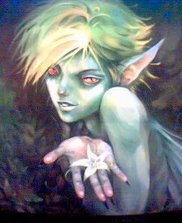
Fairies in literature and legend
The question as to the essential nature of fairies has been the topic of myths, stories, and scholarly papers for a very long time.
Practical beliefs and protection
When considered as beings that a person might actually encounter, fairies were noted for their mischief and malice. Some pranks ascribed to them, such as tangling the hair of sleepers into "Elf-locks", stealing small items or leading a traveler astray, are generally harmless. But far more dangerous behaviors were also attributed to fairies. Any form of sudden death might stem from a fairy kidnapping, with the apparent corpse being a wooden stand-in with the appearance of the kidnapped person.Consumption (tuberculosis) was sometimes blamed on the fairies forcing young men and women to dance at revels every night, causing them to waste away from lack of rest.Fairies riding domestic animals, such as cows or pigs or ducks, could cause paralysis or mysterious illnesses.
As a consequence, practical considerations of fairies have normally been advice on averting them. In terms of protective charms, cold iron is the most familiar, but other things are regarded as detrimental to the fairies: wearing clothing inside out, running water, bells (especially church bells), St. John's wort, and four-leaf clovers, among others. Some lore is contradictory, such as Rowan trees in some tales being sacred to the fairies, and in other tales being protection against them. In Newfoundland folklore, the most popular type of fairy protection is bread, varying from stale bread to hard tack or a slice of fresh home-made bread. The belief that bread has some sort of special power is an ancient one. Bread is associated with the home and the hearth, as well as with industry and the taming of nature, and as such, seems to be disliked by some types of fairies. On the other hand, in much of the Celtic folklore, baked goods are a traditional offering to the folk, as are cream and butter.
“The prototype of food, and therefore a symbol of life, bread was one of the commonest protections against fairies. Before going out into a fairy-haunted place, it was customary to put a piece of dry bread in one’s pocket.”
Bells also have an ambiguous role; while they protect against fairies, the fairies riding on horseback — such as the fairy queen — often have bells on their harness. This may be a distinguishing trait between the Seelie Court from the Unseelie Court, such that fairies use them to protect themselves from more wicked members of their race. Another ambiguous piece of folklore revolves about poultry: a cock's crow drove away fairies, but other tales recount fairies keeping poultry.
In County Wexford, Ireland, in 1882, it was reported that “if an infant is carried out after dark a piece of bread is wrapped in its bib or dress, and this protects it from any witchcraft or evil.”
While many fairies will confuse travelers on the path, the will o' the wisp can be avoided by not following it. Certain locations, known to be haunts of fairies, are to be avoided; C. S. Lewis reported hearing of a cottage more feared for its reported fairies than its reported ghost. In particular, digging in fairy hills was unwise. Paths that the fairies travel are also wise to avoid.
Home-owners have knocked corners from houses because the corner blocked the fairy path, and cottages have been built with the front and back doors in line, so that the owners could, in need, leave them both open and let the fairies troop through all night. Locations such as fairy forts were left undisturbed; even cutting brush on fairy forts was reputed to be the death of those who performed the act. Fairy trees, such as thorn trees, were dangerous to chop down; one such tree was left alone in Scotland, though it prevented a road being widened for seventy years. Good house-keeping could keep brownies from spiteful actions, because if they didn't think the house is clean enough, they pinched people in their sleep. Such water hags as Peg Powler and Jenny Greenteeth, prone to drowning people, could be avoided by avoiding the bodies of water they inhabit.
Other actions were believed to offend fairies. Brownies were known to be driven off by being given clothing, though some folktales recounted that they were offended by inferior quality of the garments given, and others merely stated it, some even recounting that the brownie was delighted with the gift and left with it. Other brownies left households or farms because they heard a complaint, or a compliment. People who saw the fairies were advised not to look closely, because they resented infringements on their privacy.The need to not offend them could lead to problems:
one farmer found that fairies threshed his corn, but the threshing continued after all his corn was gone, and he concluded that they were stealing from his neighbors, leaving him the choice between offending them, dangerous in itself, and profiting by the theft.
Millers were thought by the Scots to be "no canny", owing to their ability to control the forces of nature, such as fire in the kiln, water in the burn, and for being able to set machinery a-whirring. Superstitious communities sometimes believed that the miller must be in league with the fairies. In Scotland fairies were often mischievous and to be feared. No one dared to set foot in the mill or kiln at night as it was known that the fairies brought their corn to be milled after dark. So long as the locals believed this then the miller could sleep secure in the knowledge that his stores were not being robbed. John Fraser, the miller of Whitehill claimed to have hidden and watched the fairies trying unsuccessfully to work the mill. He said he decided to come out of hiding and help them, upon which one of the fairy women gave him a gowpen (double handful of meal) and told him to put it in his empty girnal (store), saying that the store would remain full for a long time, no matter how much he took out.
It is also believed that to know the name of a particular fairy could summon it to you and force it to do your bidding. The name could be used as an insult towards the fairy in question, but it could also rather contradictorily be used to grant powers and gifts to the user.
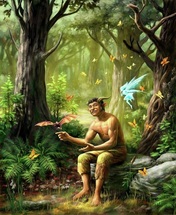
Changelings
A considerable amount of lore about fairies revolves around changelings, fairy children left in the place of stolen human babies. Older people could also be abducted; a woman who had just given birth and had yet to be churched was considered to be in particular danger. A common thread in folklore is that eating the fairy food would trap the captive, as Persephone in Hades; this warning is often given to captives who escape by other people in the fairies' power, who are often described as captives who had eaten and so could not be freed. Folklore differed about the state of the captives: some held that they lived a merry life, others that they always pined for their old friends.
Classifications
In Scottish folklore, fairies are divided into the Seelie Court, the more beneficently inclined (but still dangerous) fairies, and the Unseelie Court, the malicious fairies. While the fairies from the Seelie court enjoyed playing pranks on humans they were usually harmless pranks, compared to the Unseelie court that enjoyed bringing harm to humans as entertainment.
Trooping fairies refer to fairies who appear in groups and might form settlements. In this definition, fairy is usually understood in a wider sense, as the term can also include various kinds of mythical creatures mainly of Celtic origin; however, the term might also be used for similar beings such as dwarves or elves from Germanic folklore. These are opposed to solitary fairies, who do not live or associate with others of their kind.
Legends
In many legends, the fairies are prone to kidnapping humans, either as babies, leaving changelings in their place, or as young men and women. This can be for a time or forever, and may be more or less dangerous to the kidnapped. In the 19th Century Child Ballad, "Lady Isabel and the Elf-Knight", the elf-knight is a Bluebeard figure, and Isabel must trick and kill him to preserve her life. Child Ballad "Tam Lin" reveals that the title character, though living among the fairies and having fairy powers, was in fact an "earthly knight" and, though his life was pleasant now, he feared that the fairies would pay him as their teind (tithe) to hell. Sir Orfeo tells how Sir Orfeo's wife was kidnapped by the King of Faerie and only by trickery and excellent harping ability was he able to win her back. Sir Degare narrates the tale of a woman overcome by her fairy lover, who in later versions of the story is unmasked as a mortal. Thomas the Rhymer shows Thomas escaping with less difficulty, but he spends seven years in Elfland. Oisín is harmed not by his stay in Faerie but by his return; when he dismounts, the three centuries that have passed catch up with him, reducing him to an aged man. King Herla (O.E. "Herla cyning"), originally a guise of Woden but later Christianised as a king in a tale by Walter Map, was said, by Map, to have visited a dwarf's underground mansion and returned three centuries later; although only some of his men crumbled to dust on dismounting, Herla and his men who did not dismount were trapped on horseback, this being one account of the origin of the Wild Hunt of European folklore.
A common feature of the fairies is the use of magic to disguise appearance. Fairy gold is notoriously unreliable, appearing as gold when paid, but soon thereafter revealing itself to be leaves, gorse blossoms, gingerbread cakes, or a variety of other useless things. These illusions are also implicit in the tales of fairy ointment. Many tales from Northern Europe tell of a mortal woman summoned to attend a fairy birth — sometimes attending a mortal, kidnapped woman's childbed. Invariably, the woman is given something for the child's eyes, usually an ointment; through mischance, or sometimes curiosity, she uses it on one or both of her own eyes. At that point, she sees where she is; one midwife realizes that she was not attending a great lady in a fine house but her own runaway maid-servant in a wretched cave. She escapes without making her ability known, but sooner or later betrays that she can see the fairies. She is invariably blinded in that eye, or in both if she used the ointment on both.
Fairy Funerals : There have been claims by people in the past, like William Blake, to have seen fairy funerals. Allan Cunningham in his Lives of Eminent British Painters records that William Blake claimed to have seen a fairy funeral. 'Did you ever see a fairy's funeral, madam? said Blake to a lady who happened to sit next to him. 'Never, Sir!' said the lady. 'I have,' said Blake, 'but not before last night.' And he went on to tell how, in his garden, he had seen 'a procession of creatures of the size and colour of green and grey grasshoppers, bearing a body laid out on a rose-leaf, which they buried with songs, and then disappeared'. They are believed to be an omen of death.
Literature
Fairies appeared in medieval romances as one of the beings that a knight errant might encounter. A fairy lady appeared to Sir Launfal and demanded his love; like the fairy bride of ordinary folklore, she imposed a prohibition on him that in time he violated. Sir Orfeo's wife was carried off by the King of Faerie. Huon of Bordeaux is aided by King Oberon. These fairy characters dwindled in number as the medieval era progressed; the figures became wizards and enchantresses. Morgan le Fay, whose connection to the realm of Faerie is implied in her name, in Le Morte d'Arthur is a woman whose magic powers stem from study. While somewhat diminished with time, fairies never completely vanished from the tradition. Sir Gawain and the Green Knight is a late tale, but the Green Knight himself is an otherworldly being. Edmund Spenser featured fairies in The Faerie Queene. In many works of fiction, fairies are freely mixed with the nymphs and satyrs of classical tradition; while in others (e.g. Lamia), they were seen as displacing the Classical beings. 15th century poet and monk John Lydgate wrote that King Arthur was crowned in "the land of the fairy", and taken in his death by four fairy queens, to Avalon where he lies under a "fairy hill", until he is needed again.
Fairies appear as significant characters in William Shakespeare's A Midsummer's Night Dream, which is set simultaneously in the woodland, and in the realm of Fairyland, under the light of the moon and in which a disturbance of Nature caused by a fairy dispute creates tension underlying the plot and informing the actions of the characters. According to Maurice Hunt, Chair of the English Department at Baylor University, the blurring of the identities of fantasy and reality makes possible “that pleasing, narcotic dreaminess associated with the fairies of the play”.
Shakespeare's contemporary, Michael Drayton features fairies in his Nimphidia; from these stem Alexander Pope's sylphs of The Rape of the Lock, and in the mid 17th century, précieuses took up the oral tradition of such tales to write fairy tales; Madame d'Aulnoy invented the term contes de fée ("fairy tale"). While the tales told by the précieuses included many fairies, they were less common in other countries' tales; indeed, the Brothers Grimm included fairies in their first edition, but decided this was not authentically German and altered the language in later editions, changing each "Fee" (fairy) to an enchantress or wise woman. J. R. R. Tolkien described these tales as taking place in the land of Faerie. Additionally, not all folktales that feature fairies are generally categorized as fairy tales.
Fairies in literature took on new life with Romanticism. Writers such as Sir Walter Scott and James Hogg were inspired by folklore which featured fairies, such as the Border ballads. This era saw an increase in the popularity of collecting of fairy folklore, and an increase in the creation of original works with fairy characters.[82] In Rudyard Kipling's Puck of Pook's Hill, Puck holds to scorn the moralizing fairies of other Victorian works. The period also saw a revival of older themes in fantasy literature, such as C.S. Lewis's Narnia books which, while featuring many such classical beings as fauns and dryads, mingles them freely with hags, giants, and other creatures of the folkloric fairy tradition. Victorian flower fairies were popularized in part by Queen Mary’s keen interest in fairy art, and by British illustrator and poet Cicely Mary Barker's series of eight books published in 1923 through 1948. Imagery of fairies in literature became prettier and smaller as time progressed. Andrew Lang, complaining of "the fairies of polyanthuses and gardenias and apple blossoms" in the introduction to The Lilac Fairy Book, observed that "These fairies try to be funny, and fail; or they try to preach, and succeed."
Fairies are seen in Neverland, in Peter and Wendy, the novel version of J. M. Barrie's famous Peter Pan stories, published in 1911, and its character Tinker Bell has become a pop culture icon. When Peter Pan is guarding Wendy from pirates, the story says: "After a time he fell asleep, and some unsteady fairies had to climb over him on their way home from an orgy. Any of the other boys obstructing the fairy path at night they would have mischiefed, but they just tweaked Peter's nose and passed on."
Fairies in Malay Folk Stories
In Malays, fairy/fairies are called 'pari-pari' (Malaysian) or 'peri' (Indonesian).
They are often looked as motherly figure helpful creatures who will help those who have good heart.
Fairies in art
Images of fairies have appeared as illustrations, often in books of fairy tales, as well as in photographic-based media and sculpture. Some artists known for their depictions of fairies include Cicely Mary Barker, Arthur Rackham, Brian Froud, Alan Lee, Amy Brown, David Delamare, Meredith Dillman, Jasmine Becket-Griffith, Warwick Goble, Kylie InGold, Ida Rentoul Outhwaite, Myrea Pettit, Florence Harrison, Suza Scalora, Nene Thomas, Gustave Doré, Rebecca Guay and Greta James.
The Victorian era was particularly noted for fairy paintings. The Victorian painter Richard Dadd created paintings of fairy-folk with a sinister and malign tone. Other Victorian artists who depicted fairies include John Atkinson Grimshaw, Joseph Noel Paton, John Anster Fitzgerald and Daniel Maclise. Interest in fairy-themed art enjoyed a brief renaissance following the publication of the Cottingley Fairies photographs in 1917 and a number of artists turned to painting fairy themes.
Fairies in religion
Theosophy
In the teachings of Theosophy, Devas, the equivalent of angels, are regarded as living either in the atmospheres of the planets of the solar system (Planetary Angels) or inside the Sun (Solar Angels) (presumably other planetary systems and stars have their own angels) and they are believed to help to guide the operation of the processes of nature such as the process of evolution and the growth of plants; their appearance is reputedly like colored flames about the size of a human being. Some (but not most) devas originally incarnated as human beings. Less important smaller-in-size less evolutionarily developed minor angels are called nature spirits, elementals, and fairies. [90] The Cottingley Fairies photographs in 1917 (revealed by the "photographers" in 1981 to have been faked) were originally believed to have been real by many Theosophists. It is believed by Theosophists that devas, nature spirits, elementals (gnomes, ondines, sylphs, and salamanders), and fairies can be observed when the third eye is activated.[91] It is maintained by Theosophists that these less evolutionarily developed beings have never been previously incarnated as human beings; they are regarded as being on a separate line of spiritual evolution called the “deva evolution”; eventually, as their souls advance as they reincarnate, it is believed they will incarnate as devas. It is asserted by Theosophists that all of the above mentioned beings possess etheric bodies that are composed of etheric matter, a type of matter finer and more pure that is composed of smaller particles than ordinary physical plane matter.
 |
FAIRY TYPES
continued....... Mermaids - entice human lovers with their songs of enchantment. They cause ship-wrecking storms and are most frequently seen combing their long hair whilst admiring themselves in mirrors. Merrows - The Irish Merpeople are called Merrows and they can be distinguished from other sea-dwelling faeries in that they wear red feather caps to propel themselves down to their homes in the depths. Should their caps be stolen, they can no longer return to their watery homes. The female Merrow are very beautiful and, like other mermaids, appear before storms as an omen, but they are gentle by nature and often fall in love with mortal fishermen. This can partly be explained by the extreme ugliness of the male Merrows. Despite their alaming aspect, the males too have their redeeming features as they are generally jovial in character. Mooinjer Veggey (moo-in-jer vegar) - The Little People is a familiar Manxman term for the faeries who dwell on the Isle of Man; see Sleigh Beggey. Muryans - Muryan is the Cornish word for ant. The Cornish belief about the fairies was that they were the souls of ancient heathen people, too good for Hell and too bad for Heaven, who had gradually declined from their natural size, and were dwindling down until they became the size of ants, after which they vanished from this state and no one knew what became of them. Nuckelavee - is surely the most awful of the Scottish sea fairies. A monstrous horse with legs that are part flipper, a huge mouth and one fiery eye and, rising from its back joined to it at the waist, a hideous torso with arms that nearly reach the ground, topped by a massive head that rolls from side to side as though its neck was too weak to hold it upright. Worse than this tho is the horrible appearance of the creatures flesh, for it has no skin. Black blood coursing through yellow veins, white sinews and powerful red muscles are exposed. The Nuckelavee has an aversion to fresh running water and the pursued have only to cross it to escape. Old People, the - Another Cornish name for the fairies. Pechs, or Pehts - The Scottish Lowland names for fairies and are confused in tradition with the Picts, the mysterious people of Scotland who built the Pictish brughs and possibly also the round stone towers. The Pechs were considered tremendous castle builders and were credited with the construction of many of the ancient castles. They could not bear the light of day and so only worked at night, when they took refuge in their brughs or "sitheans" at sunrise. It seems likely that some historic memory of an aboriginal race contributed one strand to the twisted cord of fairy tradition. Peg Powler - One of the many Green Hags with sharp teeth who drag their victims down to watery graves. People of Peace - The Irish often refereed to the Sidhe in this manner. The word sidhe means peace. See Daoine Sidhe in Faery Lineage. People in the Hills, the - Fairies who live under the green mounds, or tumuli, all over England. Phooka - an Irish Goblin with a variety of rough beast-like forms. He appears sometimes as a dog or a horse, or even a bull, but is generally jet-black with blazing eyes. As seemingly friendly, shaggy, sway-backed pony Phooka offers the unwary traveller a welcome lift; but once astride he is taken for a wild and terrifying gallop across the wettest and most thorny country, eventually to be dumped headlong into the mire or deposited in a ditch. The chuckle is that of the Phooka as he gallops away. Picts - The original peoples who dwelled in the northeastern coast of Ireland. They were called the "Cruithne" and migrated down from Gaul or Galia (France). As the conquering waves of invaders arrived in Ireland, eventually the Picts retreated to the woods and lived in caves and underground forts. They were a small, dark people and became known as the classic Faery-people. See Pechs. Pigsies - See Pixies. Pixies, or Pigsies, or Piskies - These are the West Country fairies belonging to Somerset, Devon and Cornwall. There are varying traditions about the size, appearance and origin of the Pixies, but all accounts agree about their being dressed in green and about their habit of misleading travelers. Plant Rhys Dwfen (plant hree thoovn) - The family name of a tribe of fairy people who inhabited a small land which was invisible because of certain herb that grew on it. They were handsome people, rather below the average in height, and it was their custom to attend the market in Cardigan and pay such high prices for the goods there that the ordinary buyer could not compete with them. They were honest and resolute in their dealings, and grateful to people who treated them kindly. Portunes - Small agricultural fairies. It was their habit to labor on farms, and at night when the doors were shut they would blow up the fire, and, taking frogs from their bosoms, they would roast them on the coals and eat them. They were like very old men with wrinkled faces and wore patched coats. Puck - Thanks to Shakespeare, the most famous of the mischievous shape-shifting hobgoblins. He is closely related to the Welsh Pwca and the Irish Phooka. Redcap - is one of the most evil of the old Border Goblins. He lives in old ruined towers and castles, particularly those with a history of wickedness. He re-dyes his cap in human blood. Seelie Court - Blessed Court; Name of the kindly fairy host, or benovolent Faery of the positive polarity, and is generally used to describe the Scottish fairies. The malignant fairies were sometimes called the Unseelie Court. Selkies - The seas around Orkney and Shetland harbor the Selkies or Seal-Faeries (known as Roane in Ireland). A female Selkie is able to discard her seal-skin and come ashore as a beautiful maiden. If a human can capture this skin, the Selkie can be forced to become a fine, if wistful, wife. However, should she ever find her skin she immediately returns to the sea, leaving the husband to pine and die. The males raise storms and upturn boats to avenge the indiscriminate slaughter of seals. Shellycoat - A Scottish bogie who haunts fresh water streams and is festooned with shells which clatter when he moves. He takes pleasure in tricking and bewildering travelers and leading them astray. Sidhe, Sith, or Si (shee) - The Gaelic name for fairie, both in Ireland and the Highlands of Scotland. Very tall beings that seem to either shine or appear opalescent. The shining beings belong to the earthly realm; while the opalescent beings belong to the heavenly world. As with any shamanic practice there are three great worlds which we can see while we are still in the body: the heavenly, the earthly, and underworldly realms. Silent Moving Folk - The Scottish fairies who live in green knolls and in the mountain fastnesses of the Highlands. See Still-folk. Sleigh Beggey (sleigh beargar) - The Little Folk. A name given to fairies in the Manx tongue. Sluagh (slooa) - Themost formidable of the Highland fairy people; The host of the Unforgiven Dead. By some scholars, they are regarded as the fallen angels, not the dead, but on the whole their accounts correspond closely to that given by Alexander Carmichael in 'Carmina Gadelica' Small People of Cornwall, the - Fairies were sometimes spoken of this way in Cornwall. Solitary Fairies - The fairies who are chiefly malignant or ominous creatures, comprise this group, although there may be a few nature spirits or dwindled gods among them. An exception is the Brownie and its variants - though there are few family groups among the Brownies - some think that they were unacceptable in Faeryland because of their ragged, unkept appearance, and that they went off to the Seelie Court when they were properly dressed. However, this is only one school of thought on the subject. Other creatures, such as the Lepracaun, Pooka, and Bean Si, also comprise this group. Spriggans - Grotesque and ugly in shape. Although quite small, they have the ability to inflate themselves into monstrous forms which has led humans to believe them to be the ghosts of old giants. Apart from their useful function as guardians of hill treasure, Spriggans are an infamous band of villains, skilled thieves, thoroughly destructive and often dangerous. They are capable of robbing human houses, kidnapping children (and leaving a repulsive baby Spriggan in exhange) causing whirlwinds to destroy fields of corn, blighting crops and all manner of other unpleasant mischief. Sprites - A general name for fairies and other spirits such as Sylphs and nerieds. Still-Folk - The Scottish name for the Highland fairies. See Silent Moving Folk. Themselves, They, or Them that's in it - The most common Manx names used in place of the word "fairy", which was generally considered an unlucky word to use. It is sometimes said that "themselves" are the souls of those drowned in Noah's flood. Tiddy Ones, Tiddy Men, or Tiddy People - The Lincolnshire fenman's nature spirits, which are also referred to as the Yarthkins or Strangers. Most of them were undifferentiated, a drifting mass of influenced and powers rather than individuals. The one among them personally known and almost beloved was the Tiddy Mun, who was invoked in times of flood to withdraw the waters. Tokolosh - A South African faerie; Tokolosh is a sullen spirit who lives beside streams, throwing stones into the water on still nights. He is famous for frightening lone travelers, usually by jumping on a small animal or bird and strangling it so that the poor animal's panicked cry alarms the traveler. He is described as being something like a baboon, but smaller and without a tail, and covered with black hair. Trolls - Cave Dwellers, Scandinavian faeries who hate sunlight. Trooping Fay or Faery - The Faery have been divided into two main classes: trooping and solitary. It is a distinction that hold good throughout the British Isles, and is indeed valid wherever fairy beliefs are held. The trooping fay can be large or small, friendly or sinister. They tend to wear green jackets, while the Solitary Faery wear red jackets. They can range from the Heroic Faery to the dangerous and malevolent Sluagh, or those Diminutive Fairies who include the tiny nature spirits that make the fairy rings with their dancing and speed the growth of flowers. Trows - Live on the Shetland Islands, similar to the Scandinavian Trolls and like them, have an aversion to daylight. They are frequently observed performing a curious lop-sided dance called 'Henking' Tylwyth Teg (terlooeth teig) - The Fair Family. The most unusual name for Welsh fairies, though they are sometimes called Bendith Y Mammau, in an attempt to avert their kidnapping activities by invoking a euphemistic name. They are fair-haired, and love golden hair. They dance and make fairy rings. They are like the Daoine Sidhe, and dwell underground or underwater. The fairy maidens are easily won as wives and will live with human husbands for a time. The danger of visiting them in their own country lies in the miraculous passage of time in Faeryland. They give riches to their favorites, but these gifts vanish if they are spoken of. Unseelie Court - Unblessed Court; They are never under any circumstances favorable to mankind. They comprise the Slaugh, or The Host, that is, the band of the unsanctified dead. The Unseelie Court are the malignant Faery of the negative polarity, made up of Solitary Faery. Urisk - is a Scottish solitary faerie who haunts lonely pools. He will often seek out human company but his peculiar appearance terrifies those he approaches. Verry Volk - The name of the fairies in Gower of Wales; little people dressed in scarlet and green. Virikas - Never more than eighteen inches tall, these unpleasant spectral entities can be recognized by their flaming red color and their horribly pointed, bloodstained teeth. They gather outside the homes of men soon to die and jabber excitedly. To prevent this, people can erect a small shrine in their honor and burn daily gifts of flowers and spices for them. Water Leaper - Preys on Welsh Fishermen. Wee Folk - One of the Scottish and Irish names for the fairies. White Ladies, the - The use of White Ladies for both ghosts and fairies is an indication of the close connection between fairies and the dead. The White Ladies were direct descendants of the Tuatha De Danann. Wichtlein - from Southern Germany behave in much the same way as goblins. They announce the death of a miner by tapping three times. When a disaster is about to happen they are heard digging, pounding and imitating miners work. Will O' the Wisp - No one is quite sure what these distant floating balls of flame are, but they are generally associated with and are sometimes thought of as faeries in the British Isles. They are sometimes thought to be the souls of children who have died and like to cause mischief. Yakshas - Benevolent nature spirits; they are the guardians of treasures hidden in the earth and the roots of trees. Their ruler is Kubera, who lives on a mountain in the Himalayas. They are deities of cities, districts, lakes, and wells, and are thought to have originated from a cult of the ancient Dravidians. Yann-an-Od - Kindly old shepherd who tends sheep. He might have once been a faerie king. He's rather shy of humans. Yumboes - Located on Goree Island, south of the Cape Verde Peninsula in Senegal, West Africa. They are two feet tall with pearly skin and silver hair. They are also called the "Bakhna Rakhna" which translates to "The Good People." They enjoy dancing and feasting by moonlight and live in magnificent subterranean dwellings in the Paps, groups of hills about three miles from the coast. Guests to their homes report lavishly decorated tables and servants invisible except for their hands and feet. They like to eat fish. 
|
Spirits and Elements, Goblins, Elves and Gnomes
GENERIC CLASSIFICATION
Is is true that we can communicate with those tiny beings? In spite of the fact that nature has been devastated by man, and that they were compelled to hide in the jungle or in the woods, many of them live with human beings and are willing to serve them. To communicate with them, we should love everything that surrounds us. They may appear under certain circumstances and on special occasions without us ever realizing of that, for they have the ability to choose the form they shall appear under - which may be similar to the very nature either as a stone, a tree, an animal, a plant or even a human being.
These beings talk, laugh, are cautious, poor, rich, wise and crazy, just like all of us. They are the rough image of man, virtuous or vicious, pure or impure, better or worse. They are grouped in generic families based on big differences among them, and the elements they inhabit or preferably domain. They could be classified as follows:
Air Spirits:
Silfides The air element, featured by intelligence, represented by Spring and Dawn is inhabited by Sylphs in the form of butterflies.
They control winds, help birds in their migrations and flowers in their pollination. Their light yellow- toned translucent appearance is present in the scent of wet herb threatening to rain.
Water Spirits:
Nymphs, Mermaids, Nereids, Naiads, Undines,and Water Goblins.
The water element featured by love and cures, represented by Autumn and Sunset, is inhabited by nymphs, mermaids, nereids, and undines. They appear as mythological creatures in all liquids, such as seas, rivers, fresh water brooks, falls, and clouds. Their aspect vary depending on their habitat. Nereids rule the seas; undines called Naiads by the Greek, are found in lakes. They are mostly blue and a receptive energy. Like mermaids, they attract any sailor with their songs until they wreck. They are the ones channeling natural river beds.
Earth Spirits:
The Earth element is the most dense. It is represented by Winter and the night. It is inhabited by Ladies, goblins, gnomes, and trolls. They are mostly green, and have a receptive energy. Fairies or ladies are characterized by their kindness and for being the oldest inhabitants of the plant. They may either be imposing or tiny; their powers, however, are incredible and dominate nature.
Fire Spirits:
Salamanders The Fire element features both creation and destruction. It is represented by Summer, and daylight. It is inhabited by Salamanders, Farralis and Ra-Arus, appearing as reddish salamanders and dragons. They give the idea that with courage and imagination everything can be done.
They send forth projective energy, and dominate the element. No fire would be ignited without their intervention.
GOBLINS, ELVES, AND GNOMES
Trying to explain or talking about beings not considered spirits, angels, or human beings is rather difficult.
They, however, share something in common,
and more. We could give them the generic name of elemental creatures, nature spirits. They all inhabit the Magic World of Fairies.
TYPES OF GOBLINS DOMESTIC GOBLINS
They live inside houses or in the surroundings. For centuries they inhabited wild, woody, and mountainous areas,
living inside caves or caverns until one of them approached the places where human beings lived, firstly for the sake of curiosity, then with the single objective of having fun. They appear preferably at night. They are about 50 cm- high and resemble man. They go out at night and love to have fun by dint of those sleeping. Even though most of them like to bother or frighten human beings, some of them, however, love to help men in domestic households.
According to some experts, their names come from the Arabig word duar, meaning the one who inhabits or the inhabitant.
FAMILIAR IMPS
These are some little devil looking- goblins, not linked to a house, but to a person to whom they assist and make him their owner. They are linked to witchcraft.
BEDROOM GOBLINS
They belong to a strange family of aggresive and individualist goblins. They cause nightmares and choose women and children as their victims.
GENERAL FEATURES OF ELVES
All these beings are very ancient, small and ugly. When they are standing, they have arms so long that they past beyond their ankles. They have abundant and entangled hair, and a special talent for evil, though there are also benevolent Elves. They love larch roots, do not like rain, but are fond of tempests. They have pointing ears and legs like wire.
TYPES OF ELVES Elves are huge magical beings divided into two big categories: The Ljsalfar, or Light Elves; The Dopkalfar, or Darkness Elves.
LIGHT ELVES
They dominate the change in appearance, have an ethereal beauty, are one of the best disposition elves.
They are translucent and blue colored.
There are other light elves with the ability to move over fire or inside wood and stone.
They are called Ellefolk; they can foretell the future, sing and
compose a fascinating and enraptured music.
DARKNESS ELVES
Like lobsters, they build their homes beneath the earth. They are frequently found in houses where they prefer dark corners,
only visible at night. They may be of grey, brown, red or black colors. If a house has locks with no keys or small cracks in the wood,
Elves shall come in through those tiny spaces. They have many names, such as Cauchemar, Qaalruter, Nachtmannle.
GLOOM ELVES
They are the most numerous. They may be found in trees, plants, brooks or ponds. They are quite cautious and protected from the interference of strangers.
GNOMES
Since these elementary beings are earth spirits, they preferably work the soil and tree roots, to which they grant power. They look like funny
little old men, as they belong to a race coming from the beginning of times. It is said that they inhabited the lost Atlantis. These tiny creatures build
their homes under aging trees. They only go out at night and their home is lively after sunset. They are friends of animals, they speak their
same language and protect them from danger. The best feasts are when the freezing winds blow over the woods dancing and playing,
they start to run and some prefer rain for their dances.
Please see: http://en.wikipedia.org/wiki/Fairy and http://heavenzgate2.tripod.com/faegarden/ for complete
Bibliography and References on the above reposted information
ALFF LOVE does not lay claim to any of it being original content
Bibliography and References on the above reposted information
ALFF LOVE does not lay claim to any of it being original content